
Blog
FiveM Anticheat in Layers: A Practical Setup That Stops Most Cheaters

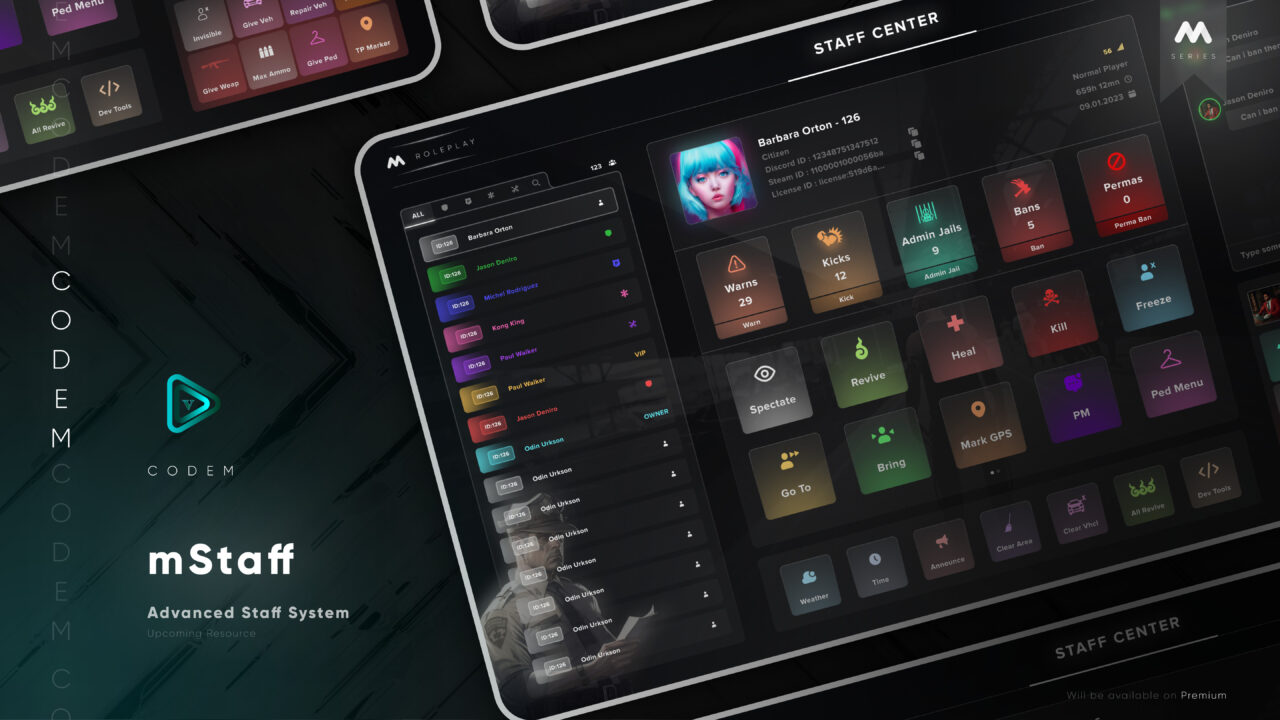
Every server owner eventually has the same bad night: a cheater spawns thirty tanks in Legion Square, wipes half the police force through walls, and the Discord melts down while you scramble for a ban button. The next morning you buy a fivem anticheat subscription and assume the problem is solved. It is not — and the owners who stay cheat-free understand why. No single product stops a motivated cheater. What stops them is layers, each one cheap on its own, brutal in combination. Here is the stack that has held up on busy public servers.
Layer 1: never trust the client
This is the foundation, and no purchased fivem anticheat replaces it. Every cheat ultimately works by making the client send something the server believes. So the server must stop believing. Concretely:
- Validate money events server-side. If a client event can add cash, a mod menu will trigger it. Payouts should be computed on the server from server-known state — job status, distance driven, items held — never accepted from a client-supplied amount.
- Sanity-check the physically possible. A player who moved 800 meters in two seconds, fired 45 rounds from a pistol without reloading, or healed from 10 to 200 HP did not do it legitimately. Flag it server-side.
- Gate item and weapon grants. Inventory changes go through one server-side function with permission checks, not a dozen scripts each calling their own give-item event.
Most of the catastrophic exploits in popular resources are exactly this: a paid script shipping a trusting event handler. When evaluating scripts — whether from a curated catalog like scripts-tebex.io or anywhere else — open the server-side code and search for event handlers that take money amounts or item names from the client. Five minutes of reading saves a wiped economy.
Layer 2: event whitelisting and entity lockdown
Mod menus work largely by spraying known event names — the famous lists of exploitable events from popular frameworks. Two server-build settings neutralize whole categories of this. First, enable state-aware event security and audit which events are actually registered; anything sensitive gets a server-issued token or a rate limit. Second, entity lockdown: run sv_entityLockdown in relaxed or strict mode so clients cannot mass-spawn objects, peds and the thirty tanks from the opening paragraph. Strict mode breaks some poorly written scripts that spawn client-side entities — test on a dev branch — but relaxed mode alone kills the most common griefing tool in the ecosystem. Add OneSync’s entity ownership checks and a server-side cap on per-player entity creation, and the “spawn apocalypse” class of attack mostly disappears.
Recommended FiveM scripts for your server




Layer 3: a commercial anticheat — as one layer, not the answer
Paid anticheats earn their cost through detection breadth: known menu signatures, injection detection, blacklisted natives, screenshot capabilities. Buy one, but buy with the right expectations. Detection is a cat-and-mouse race, so what you are really purchasing is update cadence — a product whose developers ship signature updates weekly is worth ten times one updated quarterly. Evaluate config depth too: you need per-detection actions (log versus kick versus ban), exemptions for admin tools, and webhook output you can pipe into Discord. General storefronts such as tebax.io carry protection and admin tooling alongside everything else; compare changelogs before price. And whatever you buy, run it in log-only mode for the first week — every anticheat false-positives against some script in your stack, and you want to find those collisions in logs, not in ban appeals.
Layer 4: admin tooling, logs and the paper trail
Detection without response capability is a smoke alarm with no exits. Your admins need a proper menu — spectate, freeze, screenshots, inventory inspection — and your server needs structured logging: money transactions, item movements, kill events, command usage, all timestamped and searchable. When a player reports “he was flying,” the question is never whether to trust the report; it is whether you can pull that player’s last twenty minutes in under a minute. Discord webhook logs work at small scale; past 60–70 concurrent players, move to a real log stack so you can actually query. The combat-logging, dupe-detection and audit scripts that fill this layer are stocked across stores like shop-tebex.io — they are unglamorous purchases that pay for themselves the first time you reverse a duped-money outbreak with receipts.
Upgrade your server — shop our FiveM scripts




Layer 5: ban evasion, honeypots and your players
Bans keyed to a single license identifier are speed bumps. Record every identifier on connect — license, Steam, Discord, FiveM account, hardware tokens — and match new connections against banned sets, not single values. Expect determined evaders to cycle some identifiers; the goal is raising the cost of each return, not perfection. Two multipliers finish the stack. Honeypot events: register fake versions of famously exploited event names that do nothing except instantly flag the caller — legitimate players never touch them, so false positives are near zero and mod-menu users ban themselves. And community reporting: an in-game /report with mandatory clip submission, a staff SLA of under ten minutes at peak, and visible follow-up. Your 200 players see infinitely more than your 4 admins; servers that make reporting effortless catch the subtle cheaters — aim assist, ESP — that no signature scan reliably finds.
None of these layers is exotic, and only one of them costs a subscription. Server-side validation, event and entity lockdown, a well-configured commercial product, real logs, identifier-based bans and honeypots: stack all six and the casual menu kid bounces off in minutes, the determined cheater burns hours for one evening of grief, and your Legion Square stays tank-free. That is what “stopped most cheaters” actually looks like — not a silver bullet, but a wall too expensive to climb.